
From arriving in America to becoming a permanent resident: understanding one of the most important milestones in the immigration journey.
More than a piece of plastic
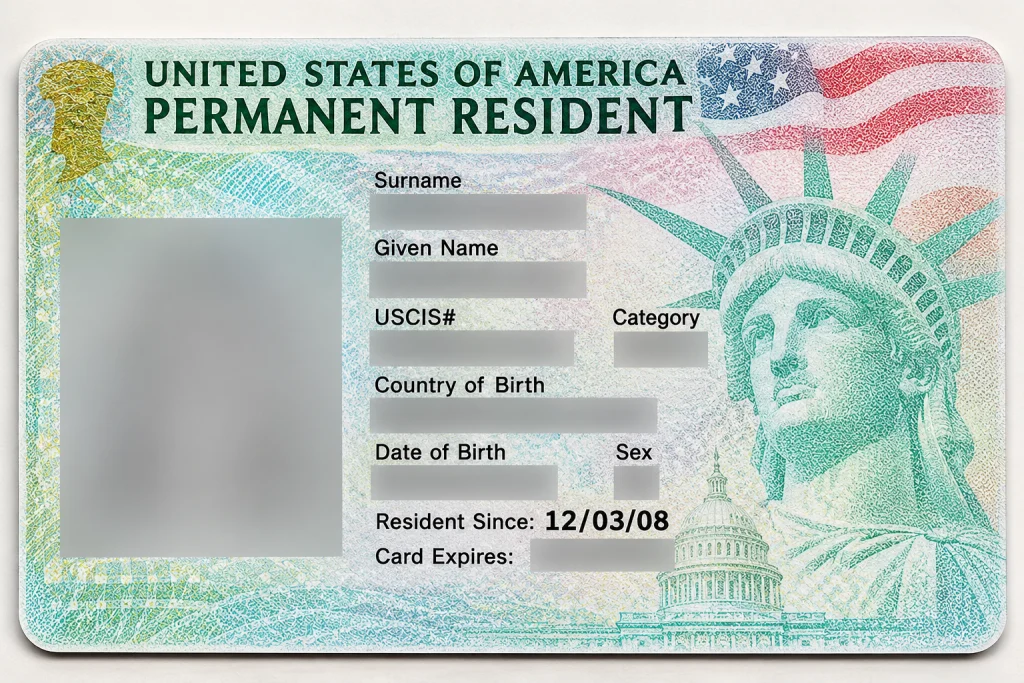
When I first arrived in the United States in 2003, I had no idea how much my life would change. My American journey began in Chicago, a city that would become my home for the next three years. In 2006, I moved to California, where another chapter of my life began. Like many immigrants, I discovered that building a life in a new country involves much more than learning a language, finding a place to live, or adjusting to unfamiliar customs. There are also immigration procedures, documents, applications, and regulations to understand. In August 2008, I reached an important milestone in that process when I received employment authorization. A few months later, on December 3, 2008, I became a lawful permanent resident of the United States. Those dates remain part of my personal American story. Today, more than two decades after arriving in the United States, I look at immigration from a different perspective. Having lived through the process myself, I understand why so many people have questions about the document commonly known as the Green Card. What exactly is it? Who can obtain one? What rights does it provide? And perhaps most importantly, what responsibilities come with becoming a permanent resident? Let’s take a closer look.
What is a Green Card?
A Green Card, officially known as the Permanent Resident Card (Form I-551), is evidence that its holder has been granted lawful permanent resident status in the United States. In practical terms, permanent residents are generally authorized to live and work in the country indefinitely, provided they maintain their immigration status and comply with applicable laws. But a Green Card is not the same as American citizenship. Permanent residents retain their original nationality unless they acquire another citizenship, and they do not automatically receive all the rights reserved for U.S. citizens. For many immigrants, however, obtaining permanent residency represents a significant step toward stability, professional opportunities, and building a future in America.
Who can qualify for a Green Card?
There is no single path to becoming a lawful permanent resident. U.S. immigration law establishes several eligibility categories, each with its own requirements.
1. Family-based immigration
One of the most familiar pathways involves sponsorship by qualifying family members. U.S. citizens may petition for certain relatives, including spouses, children, parents, and siblings, depending on the applicable category. Lawful permanent residents may also petition for certain family members, particularly spouses and unmarried children. Some relatives of U.S. citizens are classified as immediate relatives, while others fall into family preference categories that are subject to annual visa limits. As a result, waiting times can vary considerably.
2. Employment-based immigration
Another important pathway involves employment, professional qualifications, or investment. Employment-based immigrant categories include certain individuals with extraordinary abilities, outstanding professors and researchers, multinational executives, professionals with advanced degrees, skilled workers, and qualifying investors. Some categories require an employer to sponsor the applicant. Others allow eligible individuals to petition on their own behalf. Depending on the category, labor certification or other evidence may also be required. An important distinction: receiving permission to work in the United States does not automatically mean receiving permanent residency.
3. Diversity visa lottery
The Diversity Immigrant Visa Program, commonly called the Green Card Lottery, provides a possible immigration pathway for eligible individuals from countries with historically low rates of immigration to the United States. Applicants must meet specific eligibility requirements, including qualifying education or work experience. Selection does not guarantee a visa or permanent residency. Applicants must still satisfy the relevant immigration requirements, and visa availability is limited. Because program rules and availability can change, applicants should always consult the official U.S. Department of State website.
4. Refugees and asylees
People who have been admitted as refugees or granted asylum may become eligible to apply for permanent residency under special immigration provisions. The requirements and timing depend on the person’s status and applicable law.
5. Other special immigration categories
Additional pathways exist for certain special immigrants, humanitarian beneficiaries, and other individuals covered by specific provisions of immigration law. Eligibility depends on the circumstances of each case.
Employment Authorization vs. Green Card: what’s the difference?
This distinction is especially meaningful to me because employment authorization was one of the milestones in my own immigration journey. An Employment Authorization Document (EAD), often called a work permit, allows certain noncitizens to work legally in the United States for an authorized period. It does not, by itself, grant permanent resident status. A Green Card, on the other hand, serves as evidence of lawful permanent residency and generally provides ongoing authorization to live and work in the United States. In other words, someone may be legally authorized to work in America without being a permanent resident. For immigrants navigating different stages of the process, understanding that distinction is essential.

What rights does a Green Card provide?
Permanent residency brings important rights and opportunities.
- The right to live in the United States permanently. A lawful permanent resident may establish a home in the United States, subject to maintaining that status.
- The right to work. Permanent residents may generally work for employers throughout the country, although certain positions are restricted to U.S. citizens.
- Protection under U.S. laws. Permanent residents are entitled to the protection of applicable federal, state, and local laws.
- The ability to own property and establish businesses. Permanent residents can generally purchase homes, establish businesses, and participate in economic life, subject to applicable restrictions.
- The ability to sponsor certain family members. Permanent residents may petition for qualifying spouses and unmarried children to immigrate, subject to immigration rules and visa availability.
- The possibility of becoming a U.S. citizen. Many permanent residents eventually become eligible to apply for naturalization after meeting residence, physical presence, good moral character, and other requirements.
However, these rights do not make a permanent resident a U.S. citizen. For example, permanent residents cannot vote in federal elections and generally cannot hold a U.S. passport.
Responsibilities of a permanent resident
With permanent residency come important obligations.
Obey U.S. laws
Permanent residents must comply with federal, state, and local laws. Certain criminal convictions or immigration violations can have serious consequences, including removal proceedings.
File taxes properly
Lawful permanent residents are generally treated as U.S. residents for federal income tax purposes. This means they are generally subject to taxation on worldwide income, not merely money earned in the United States, although tax treaties, credits, exclusions, and other rules may affect the amount owed.
Maintain the United States as a permanent home
A Green Card is intended for individuals whose permanent home is in the United States. Travel abroad is permitted, but extended absences or circumstances indicating that someone has moved permanently to another country may raise questions about abandonment of residence.
Keep immigration records updated
Permanent residents generally must report changes of address to USCIS within 10 days of moving, unless an exception applies. They must also maintain appropriate evidence of their status and follow the rules for renewing or replacing their permanent resident cards.
Selective service registration
Most male lawful permanent residents who are required to register must do so between the ages of 18 and 25, subject to applicable exceptions. Registration does not mean automatic military service.

Can you travel outside the United States with a Green Card?
Yes. Permanent residents may generally travel internationally and return to the United States, provided they meet the applicable requirements. However, there is an important difference between taking a vacation abroad and effectively relocating to another country. A short trip usually does not create problems with maintaining permanent residency. Longer absences require more careful consideration. An absence of more than six months may raise additional questions, including questions affecting future eligibility for naturalization. A trip lasting one year or longer generally creates additional documentation and reentry concerns. Permanent residents planning extended travel may need to apply for a reentry permit before departing. Even shorter trips can become problematic if the circumstances suggest that the person no longer intends to maintain the United States as a permanent home. Simply returning to America once a year does not automatically preserve permanent resident status.
Can you lose your Green Card?
Yes. Although permanent residency is intended to be long-term, the status is not unconditional. A person may lose lawful permanent resident status through certain grounds of removability, abandonment of residence, or voluntary surrender of status. Immigration violations, certain criminal convictions, and other circumstances may have serious legal consequences. However, there is an important distinction between losing the physical card and losing permanent resident status. For most permanent residents, the expiration of a standard 10-year Green Card does not automatically terminate their immigration status. The card is evidence of the status; the two are not identical. Conditional permanent residents, who generally receive two-year cards, face different requirements and must follow the applicable procedures to remove conditions on residence.
Green Card vs. U.S. Citizenship
Although permanent residents and citizens share many legal protections, there are important differences.
| Green Card Holder | U.S. Citizen |
|---|---|
| May generally live and work permanently in the U.S. | Has the right to live and work in the U.S. |
| Cannot vote in federal elections | Can vote in federal elections if eligible |
| Travels using a foreign passport and appropriate residency documentation | Can obtain a U.S. passport |
| May face immigration consequences for certain violations | Generally cannot be deported |
| Can sponsor certain relatives | Has broader family sponsorship categories |
| May apply for citizenship when eligible | Already holds citizenship |
For many immigrants, naturalization represents the next major milestone after permanent residency.
From Green Card to American Citizenship
Most applicants seeking naturalization under the general eligibility rules must have held lawful permanent resident status for at least five years. Certain applicants married to U.S. citizens may qualify under a three-year provision if they satisfy the additional requirements. Applicants must also meet other criteria, including continuous residence, physical presence, English and civics requirements where applicable, and good moral character. Permanent residency does not automatically become citizenship after five years. Naturalization requires a separate application and approval process.

Ten things you may not know about a Green Card
- A Green Card does not have to be physically green, although modern versions use green as a prominent design element.
- A Green Card and a work permit are not the same document.
- Most standard Green Cards are valid for 10 years, but permanent resident status does not ordinarily expire with the card.
- Some permanent residents receive conditional status for two years.
- Permanent residents generally must report a change of address to USCIS within 10 days.
- Living abroad for an extended period can put permanent resident status at risk.
- Permanent residents generally must report worldwide income for U.S. federal tax purposes.
- A Green Card does not provide the right to vote in federal elections.
- Eligible permanent residents can petition for certain family members.
- Obtaining permanent residency does not automatically guarantee future U.S. citizenship.
A personal reflection: every immigration journey is different
Looking back on my own immigration journey, I realize how fortunate I was. My applications were processed relatively quickly, and I was able to move from employment authorization to permanent residency and eventually American citizenship without the prolonged uncertainty that so many immigrants experience. But my experience is only one of millions.
For some people, obtaining a Green Card is a relatively straightforward process. For others, it involves years of waiting, complicated paperwork, unexpected delays, and difficult decisions. Families may spend long periods apart, careers may be put on hold, and plans for the future may depend on a single immigration decision. Having gone through the process myself, I understand that a Green Card represents much more than permission to live and work in the United States. It offers stability, opportunity, and the possibility of building a future in a country that, for many of us, eventually becomes home. My journey began with a decision to move to America. Over the years, that decision became a life, a career, and a sense of belonging. And perhaps that is what makes every immigration story unique. The documents may look similar, but the journeys behind them never are.

Official reference links:
- USCIS – Green Card Eligibility Categories
- USCIS – Green Card Information
- IRS – Green Card Tax Residency
- U.S. Department of State – Diversity Visa Program
Disclaimer: This article provides general educational information, not individualized immigration or legal advice. Immigration laws, procedures, and eligibility requirements can change. Readers should consult official U.S. government resources or a qualified immigration attorney regarding their circumstances.
Discovering Our World – Exploring places, cultures, histories, and the stories that connect us.