

An unforgettable journey through architecture, history, art, and the heart of the American Midwest.
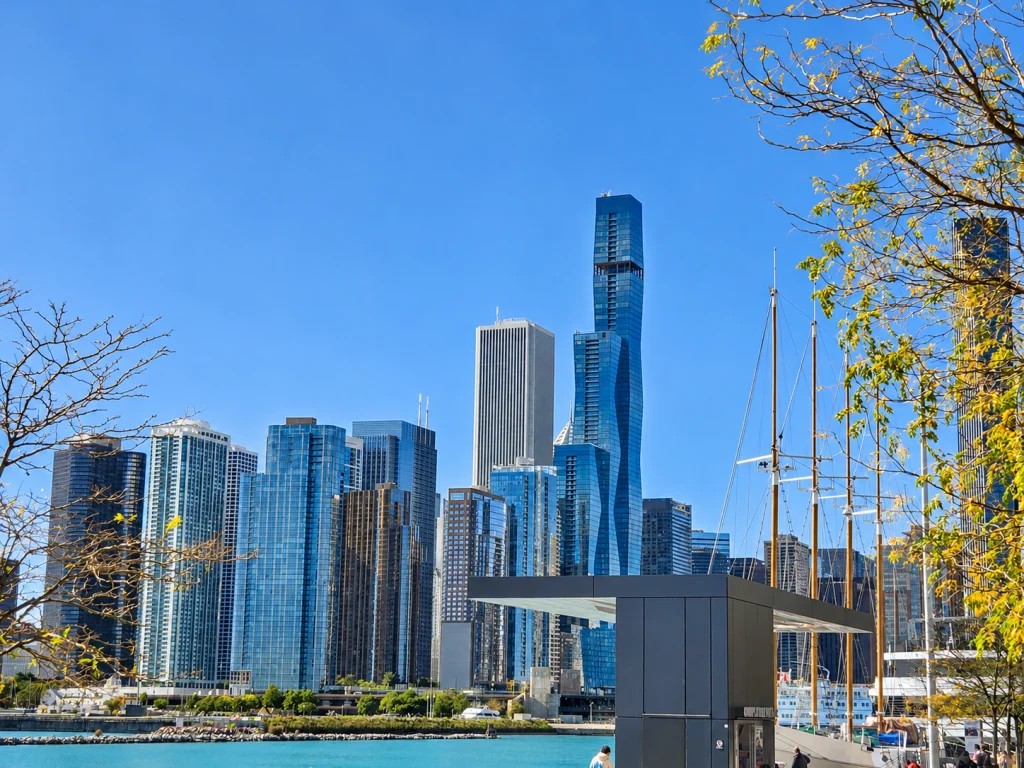
Chicago is a city that never ceases to surprise me. I lived here for three years, from 2003 to 2006, and have returned many times since. Yet every visit brings a new discovery. A building I somehow overlooked, a fascinating piece of history, an unfamiliar neighborhood, or a spectacular view that makes me stop and admire the city all over again.
Located on the southwestern shore of Lake Michigan, Chicago is the third-largest city in the United States and one of the country’s most fascinating destinations. Famous for its skyscrapers, distinctive architecture, blues and jazz music, deep-dish pizza, and rich immigrant heritage, it offers an extraordinary combination of history, culture, and modern urban life. But Chicago is much more than a collection of famous landmarks. It is a city that reinvented itself after disaster, helped shape modern architecture, and became home to people from around the world.
Whether you’re visiting for a weekend or planning a longer stay, here are the places and experiences I believe deserve a spot on your Chicago itinerary.
1. Chicago River – discover the city from the water
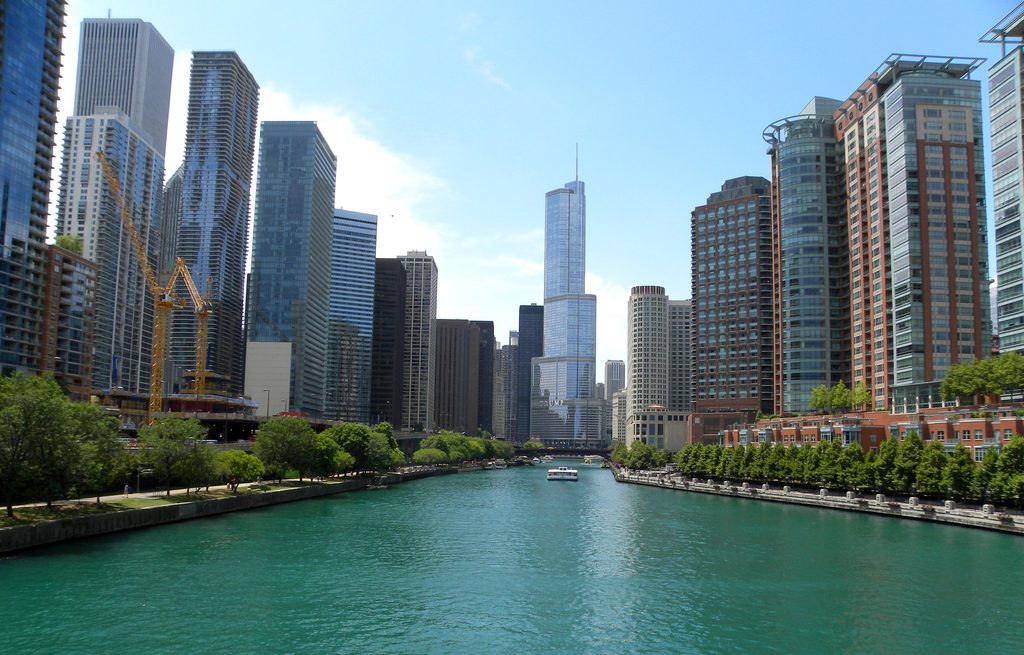
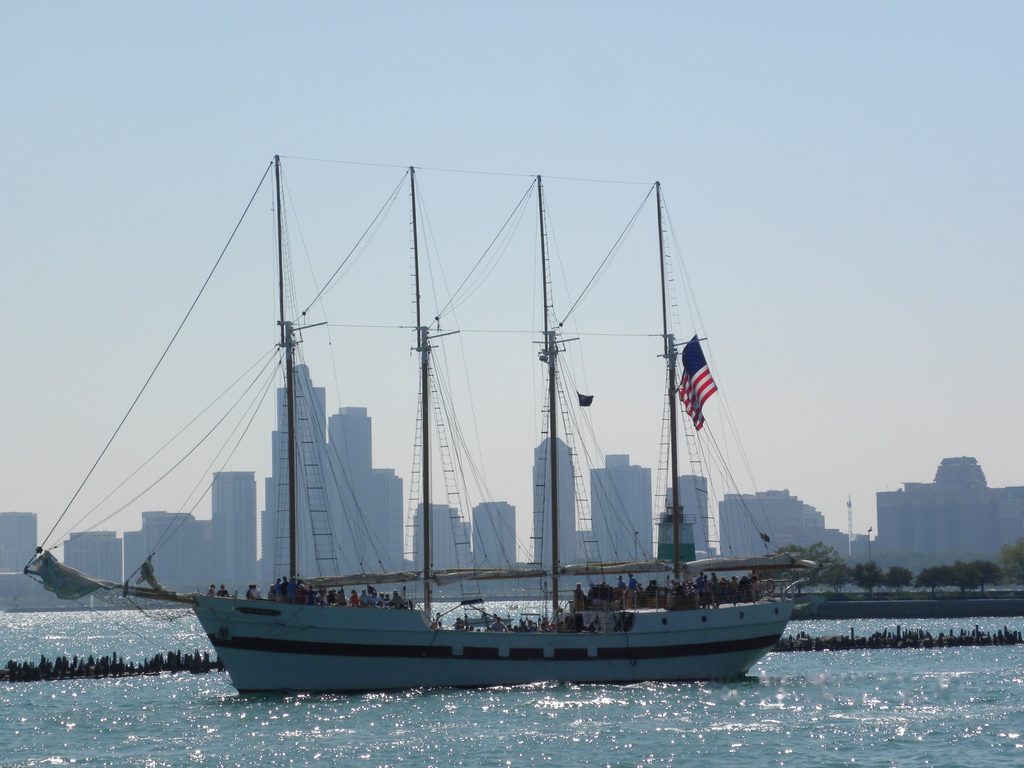
One of the best ways to appreciate Chicago’s remarkable architecture is from the Chicago River. Flowing through the heart of downtown, the river is surrounded by some of the city’s most impressive buildings. Historic structures stand alongside modern glass towers, creating a fascinating architectural landscape. The Chicago Riverwalk, a pedestrian promenade along the water, is an excellent place for a leisurely stroll. Along the way, you’ll find restaurants, cafés, public art, and beautiful views of Chicago’s famous bridges. However, if you have time for only one organized sightseeing activity, I would recommend an architectural boat cruise. These tours offer a completely different perspective on the city. As you travel beneath historic bridges and between towering skyscrapers, guides explain how Chicago became one of the world’s most influential centers of architectural innovation. Look out for Marina City, nicknamed the Corn Cobs because of its distinctive cylindrical towers, the historic Wrigley Building, and the impressive Trump International Hotel & Tower.
Travel tip: Choose a guided architecture cruise rather than an ordinary sightseeing boat ride if you’re interested in history and architecture. The commentary makes the experience much more rewarding.
2. Millennium Park – home of the famous bean
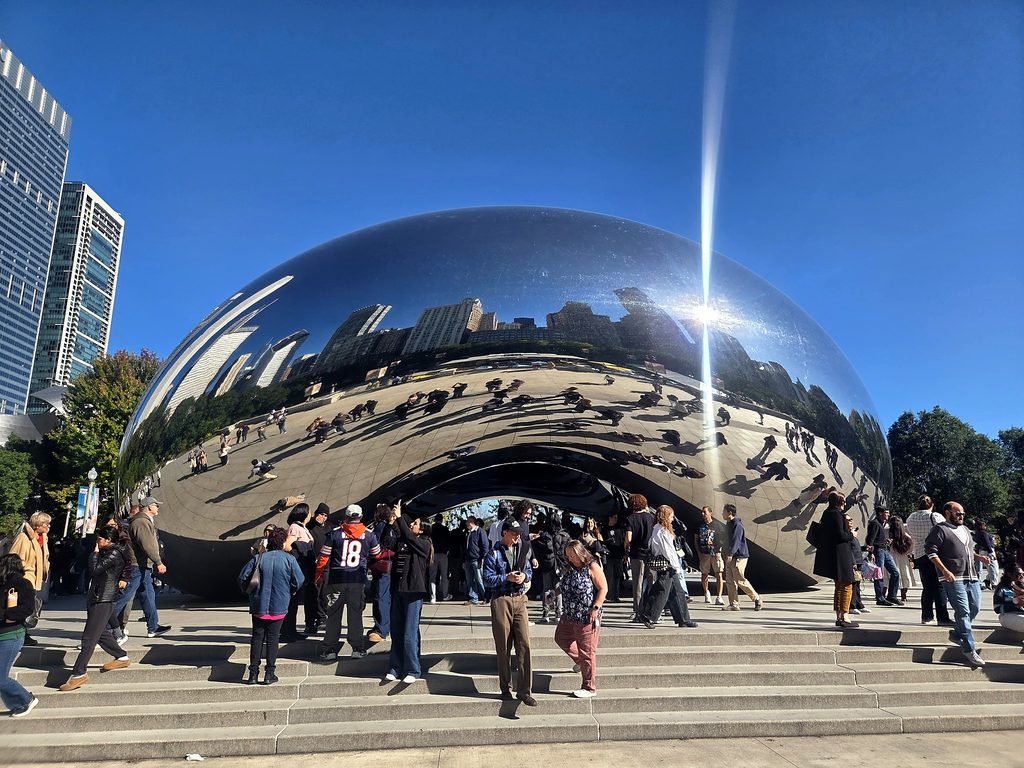
No visit to Chicago would be complete without spending time in Millennium Park. Located in the heart of downtown, this beautiful public space opened in 2004 and quickly became one of the city’s most recognizable attractions. Its most famous landmark is Cloud Gate, the enormous stainless-steel sculpture created by British-Indian artist Anish Kapoor. Most people simply call it The Bean. And once you see it, you’ll understand why. The sculpture’s polished surface reflects the surrounding skyscrapers, sky, and visitors in fascinating, constantly changing patterns. Walking around and beneath it feels almost like stepping into a giant curved mirror. But Millennium Park has much more to offer. The Crown Fountain consists of two glass-block towers displaying enormous digital portraits of Chicago residents. During warmer months, water flows from the towers, creating a playful gathering place for visitors. Nearby, the Jay Pritzker Pavilion, designed by architect Frank Gehry, hosts outdoor concerts and cultural events. Its sweeping metallic structure is a work of art in itself. For a quieter experience, visit Lurie Garden, a peaceful green retreat surrounded by downtown skyscrapers. I have visited Millennium Park several times, and it remains one of my favorite places in Chicago. There is something special about standing among the city’s towering buildings while enjoying art, greenery, and open space.
Travel tip: Millennium Park is free to enter. Early mornings are especially pleasant if you want photographs of Cloud Gate with fewer people.
3. Buckingham Fountain – a magnificent Chicago landmark
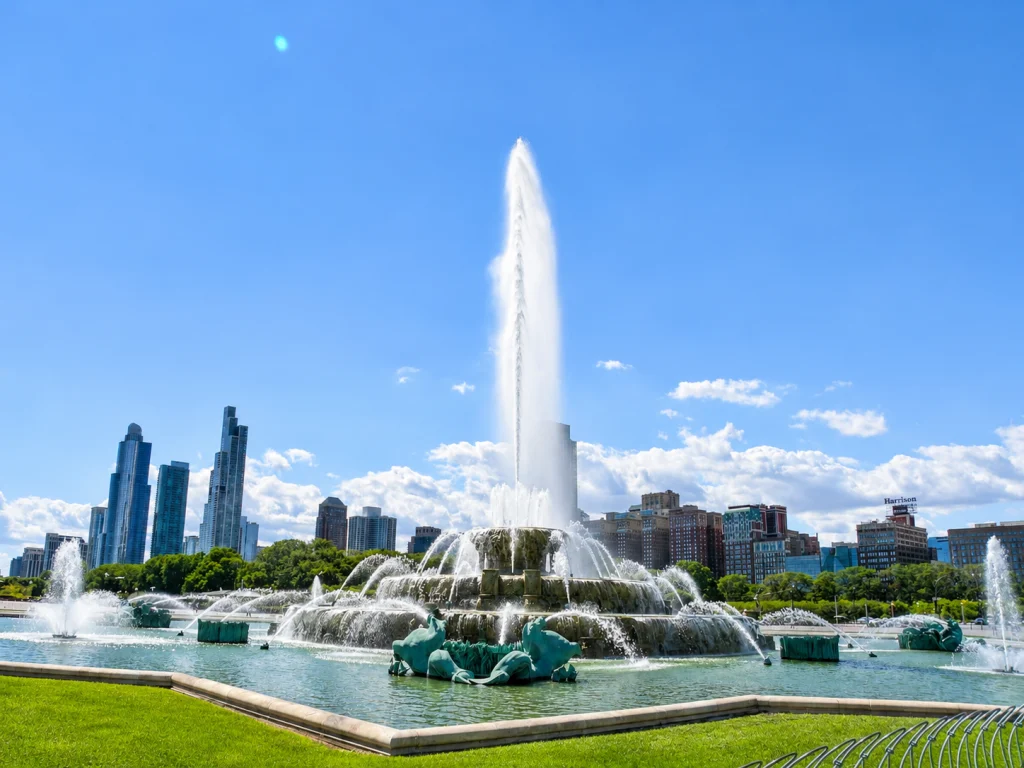
Buckingham Fountain is one of Chicago’s most beautiful and recognizable attractions. Located in Grant Park, near Lake Michigan, this monumental fountain was dedicated in 1927 and remains one of the largest fountains of its kind in the world. During one of my visits to Chicago, I made a special point of returning to the fountain. Even after seeing it many times, I was impressed by its enormous scale and elaborate design. The fountain measures approximately 280 feet (85 meters) in diameter and contains roughly 1.5 million gallons of water. Its elaborate structure features three tiers of basins, decorative bronze seahorses, and powerful water jets. During major displays, the central jet can reach approximately 150 feet (46 meters) into the air. But its beauty is only part of the story.
Why Is It called Buckingham Fountain?
Despite what its name might suggest, the fountain has nothing to do with Buckingham Palace in London. It was donated to Chicago by philanthropist Kate Sturges Buckingham in memory of her brother, Clarence Buckingham, a successful businessman and passionate supporter of the arts. The fountain’s design symbolizes Lake Michigan. Its four groups of bronze seahorses represent the four states bordering the lake: Illinois, Indiana, Michigan, and Wisconsin. This symbolism makes the fountain more than an impressive decorative structure. It is also a tribute to the Great Lakes region and Chicago’s close relationship with the water. The fountain typically operates during the warmer months, with regular water displays and evening illumination.
Travel tip: Visit during daylight to admire the sculptures and surrounding skyline. If possible, return after dark for the illuminated water display. Check the seasonal operating schedule before your visit.
4. The Art Institute of Chicago – a world-class art collection
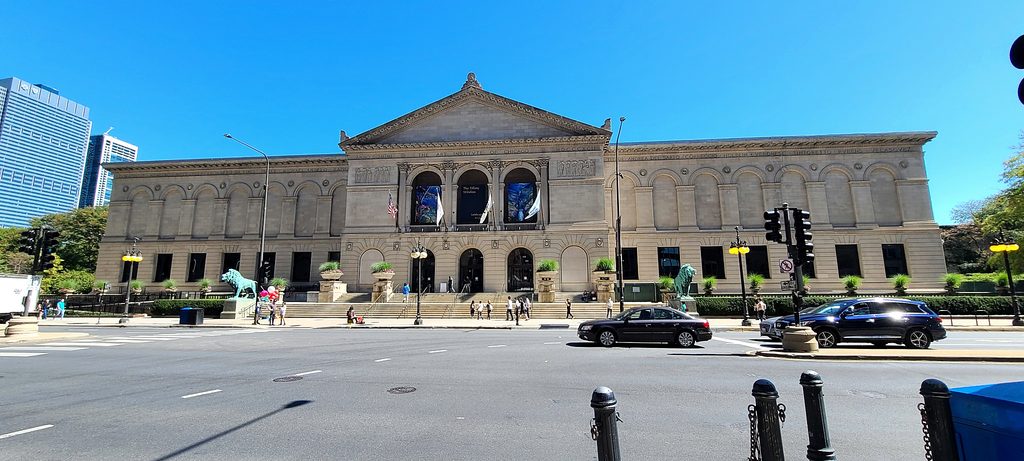
Just a short walk from Millennium Park stands one of America’s most prestigious art museums. Founded in 1879, the Art Institute of Chicago houses an extraordinary collection spanning thousands of years and cultures. Its famous entrance, guarded by two bronze lions, is itself a Chicago landmark. Inside, visitors can admire masterpieces by artists such as Claude Monet, Pierre-Auguste Renoir, Vincent van Gogh, Georges Seurat, and Grant Wood. Among the museum’s most celebrated works are Seurat’s A Sunday on La Grande Jatte — 1884, Grant Wood’s American Gothic, and Edward Hopper’s Nighthawks. The museum also features impressive collections of sculpture, photography, decorative arts, Asian art, and contemporary works. Even visitors who don’t consider themselves particularly interested in art may find something fascinating here.
Travel tip: Allow at least two to three hours for a highlights visit. Art enthusiasts could easily spend most of a day exploring the collections.
5. Route 66 – where America’s legendary highway begins
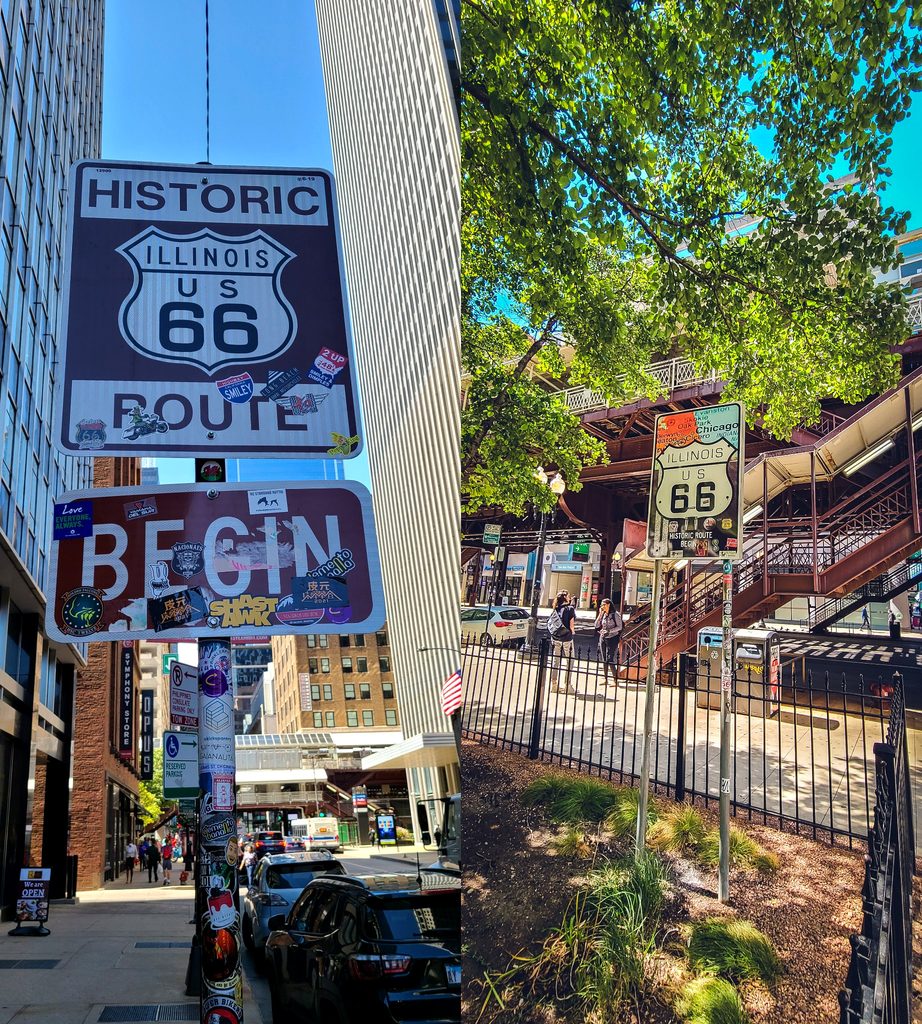
Chicago holds a special place in American road-trip history. It is the eastern starting point of the legendary Route 66, one of the most famous highways in the world. Established in 1926, Route 66 originally connected Chicago with Santa Monica, California, crossing eight states and stretching for more than 2,400 miles. Often called the Mother Road or Main Street of America, it became a symbol of freedom, adventure, and the American dream. During one of my visits, I decided to find the famous Route 66 starting-point sign. You might think locating the beginning of such a legendary highway would be simple. However, the history of its starting point is surprisingly complicated. The original eastern terminus was associated with Michigan Avenue and Jackson Boulevard. Over the years, traffic changes and highway realignments altered the route. For decades, visitors have photographed the familiar Begin Historic Route 66 sign near Adams Street and Michigan Avenue, across from the Art Institute of Chicago. In 2026, as part of Route 66’s centennial celebrations, Chicago also extended the ceremonial starting point to Navy Pier, creating a symbolic pier-to-pier connection with Santa Monica. This means visitors can explore both the traditional downtown starting point and the newer centennial landmark. For anyone fascinated by American history and road trips, Route 66 is much more than a road. It represents an important chapter in the country’s cultural identity. And for those of us living in Southern California, there is something particularly appealing about standing at the Chicago end of a highway that eventually reaches the Pacific Ocean.
Travel tip: Combine the traditional Route 66 sign with a visit to the Art Institute, Millennium Park, and Buckingham Fountain. All are within a convenient downtown sightseeing area.
6. Agora – a remarkable Polish contribution to Chicago
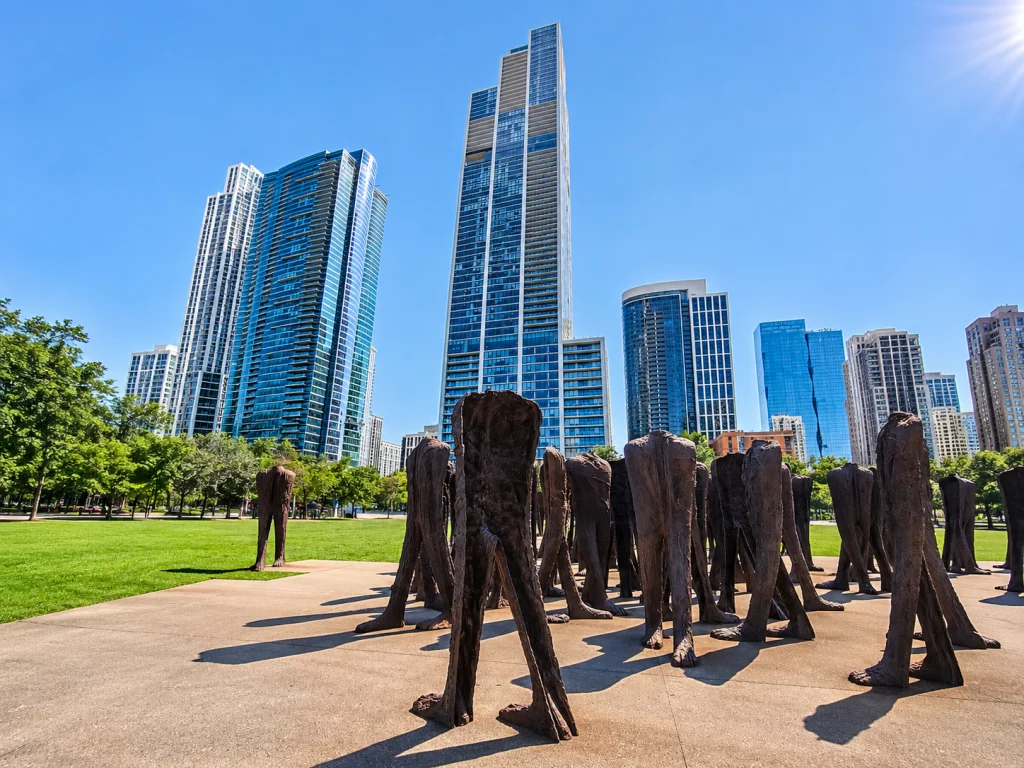
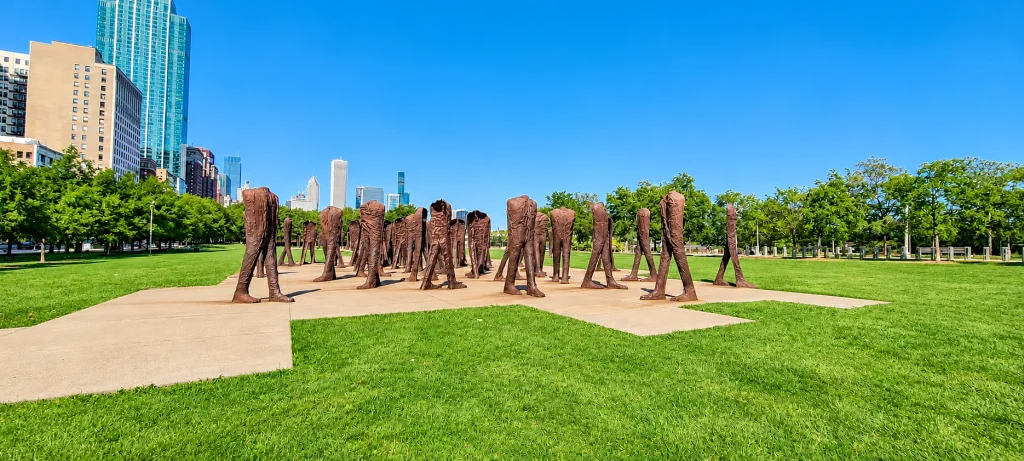
One of Chicago’s most fascinating and often overlooked public artworks is Agora, created by internationally acclaimed Polish sculptor Magdalena Abakanowicz. Located near the southern end of Grant Park, the installation consists of 106 monumental cast-iron figures, each approximately nine feet (2.7 meters) tall. The figures have no heads or arms. Some appear to be walking, while others stand motionless. They are arranged in groups, creating the impression of a mysterious crowd frozen in time. The installation takes its name from the ancient Greek word agora, meaning a public gathering place. Created in Poland and installed in Chicago in 2006, the sculptures represent a significant cultural connection between Poland and the United States. Abakanowicz’s work frequently explored the relationship between individuals and crowds, as well as themes of identity, vulnerability, conformity, and human experience. Her own life was shaped by the upheavals of twentieth-century European history, including World War II and the decades of communist rule in Poland. Walking among these enormous, anonymous figures is an unusual experience. Their rough surfaces and imposing forms create an atmosphere that is both unsettling and thought-provoking. Unlike traditional monuments, Agora does not offer a simple story or obvious interpretation. Instead, it invites visitors to reflect on humanity, individuality, and the power of the collective. As someone originally from Poland, I find this installation particularly meaningful. It is a remarkable reminder that Polish artists have contributed to Chicago’s cultural landscape in ways that extend far beyond the city’s immigrant neighborhoods.
Travel tip: Don’t just photograph the installation from a distance. Walk among the figures to appreciate their scale and arrangement. Check the current installation status before visiting, as future park plans may affect its location.
7. Willis Tower – Chicago from above
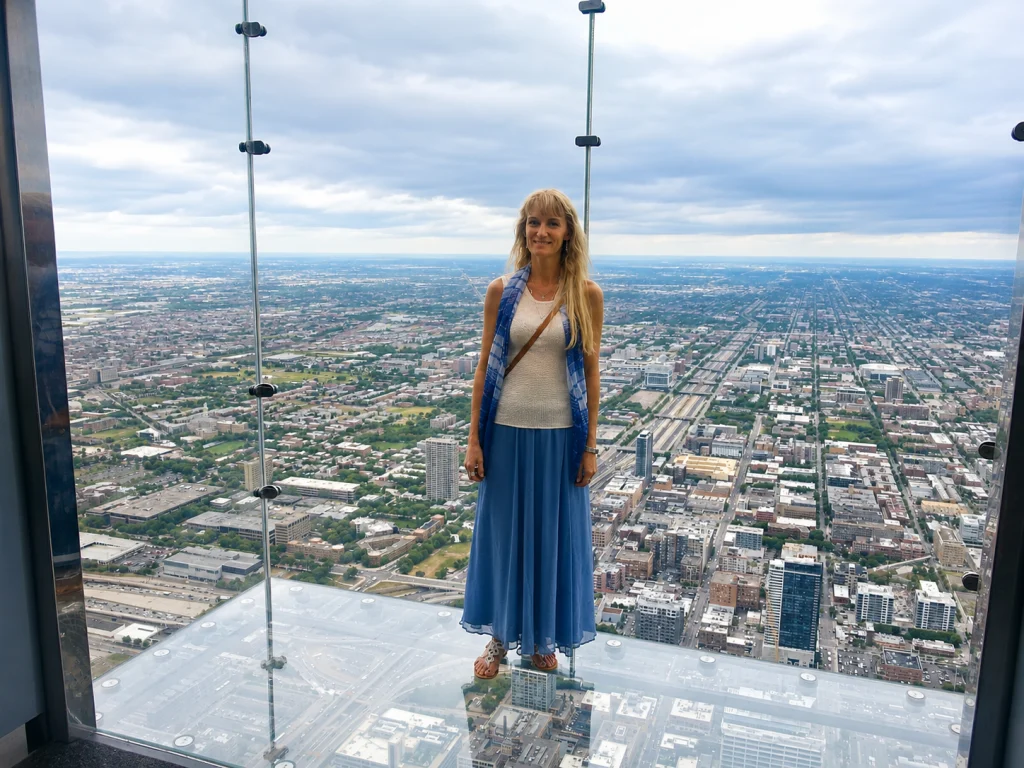
For decades, the Sears Tower was one of the most recognizable buildings in the world. Today officially known as Willis Tower, this 110-story skyscraper was completed in 1973 and held the title of the world’s tallest building for nearly 25 years. It remains one of Chicago’s most famous architectural landmarks. The main attraction for visitors is Skydeck Chicago, located on the 103rd floor. From this height, the city stretches out in every direction. On a clear day, visitors may see across Lake Michigan and into neighboring states. For an extra thrill, step onto The Ledge, a series of glass balconies extending beyond the building’s exterior. Looking straight down through the transparent floor is not an experience for everyone! However, the panoramic views are unforgettable.
Travel tip: Book tickets in advance, especially for weekends and sunset visits. Visibility can change quickly, so check the weather before choosing your time.
8. 360 CHICAGO – another spectacular observation deck
If you enjoy panoramic views, Chicago offers another excellent observation deck. 360 CHICAGO is located on the 94th floor of the former John Hancock Center, now known by its address, 875 North Michigan Avenue. Unlike Willis Tower, which offers spectacular views of downtown, this observation deck provides particularly beautiful perspectives of Lake Michigan, the northern neighborhoods, and the Magnificent Mile. Adventurous visitors can try TILT, a moving glass platform that tilts outward from the building. Personally, I think both observation decks offer something different. If you have time for only one, choose according to the views you most want to see.
Travel tip: Sunset is especially beautiful, when the city gradually transforms from daylight into a sea of illuminated streets and skyscrapers.
9. The Magnificent Mile – Chicago’s famous shopping avenue
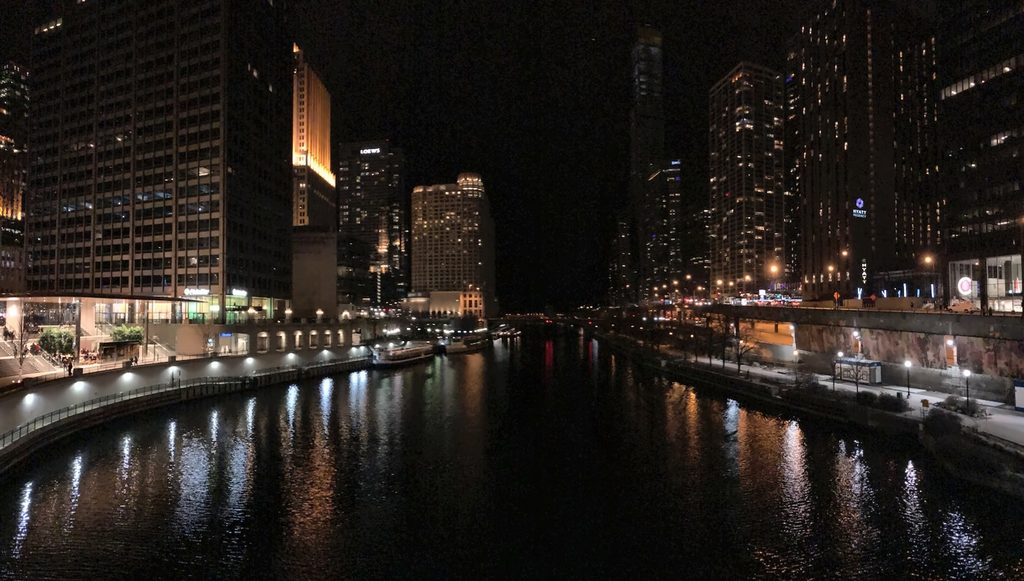
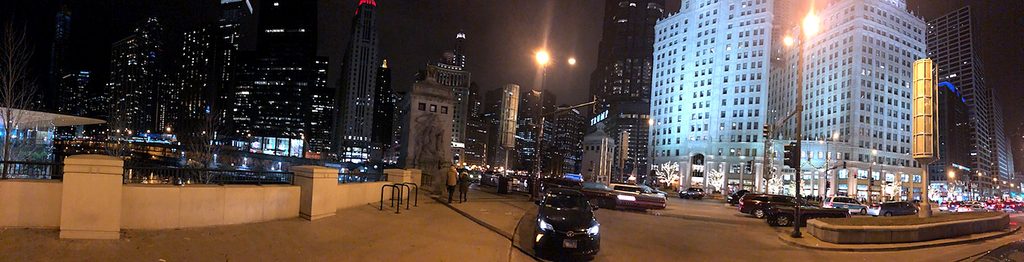
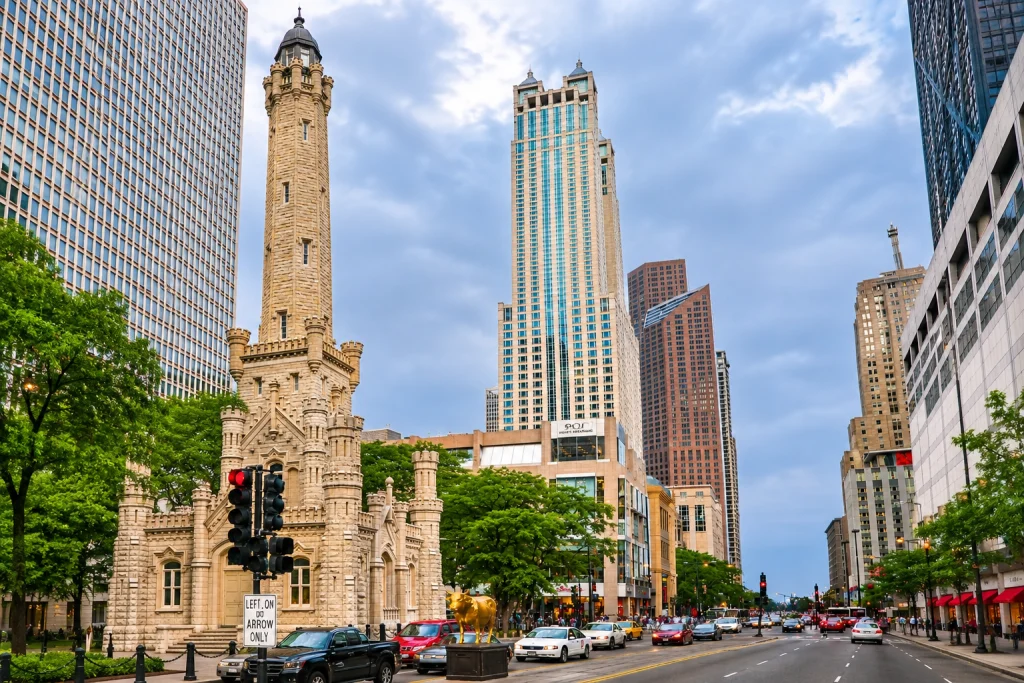
Stretching along North Michigan Avenue, the Magnificent Mile is one of Chicago’s best-known shopping and entertainment districts. Luxury boutiques, department stores, hotels, restaurants, and historic buildings line this celebrated avenue. But you don’t need to enjoy shopping to appreciate the area. Among its architectural highlights are the historic Chicago Water Tower and the nearby Pumping Station, two rare surviving landmarks associated with the era of the Great Chicago Fire. The surrounding streets offer an interesting mixture of nineteenth-century history and modern skyscrapers. The Magnificent Mile is also an excellent place to experience Chicago’s energetic urban atmosphere.
Travel tip: Combine a walk along Michigan Avenue with a visit to 360 CHICAGO and the Chicago River.
10. Navy Pier – entertainment on Lake Michigan
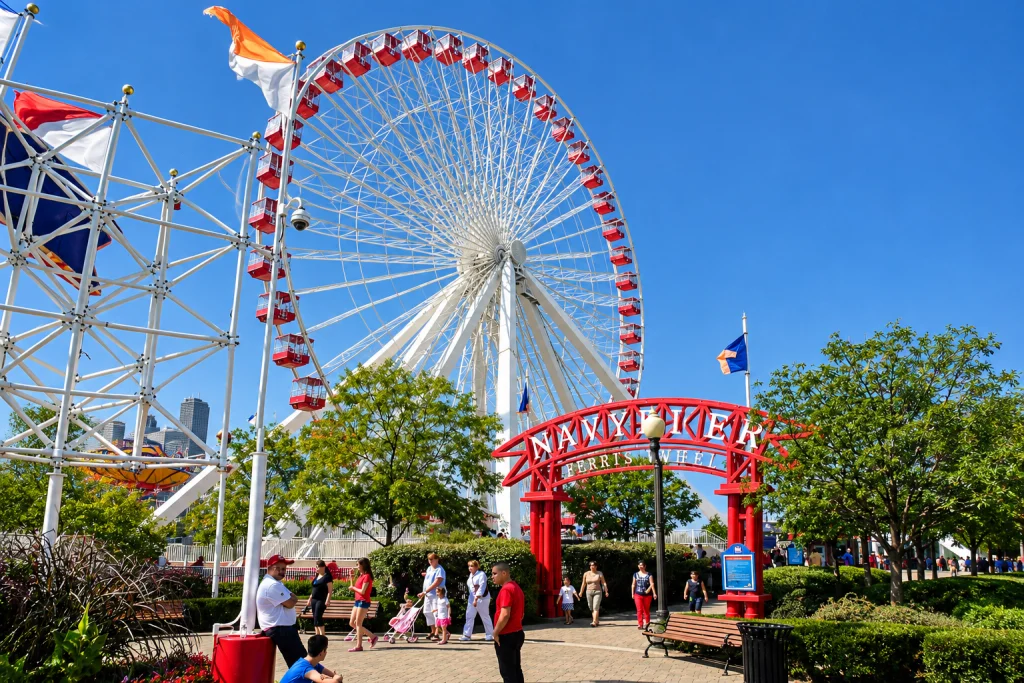
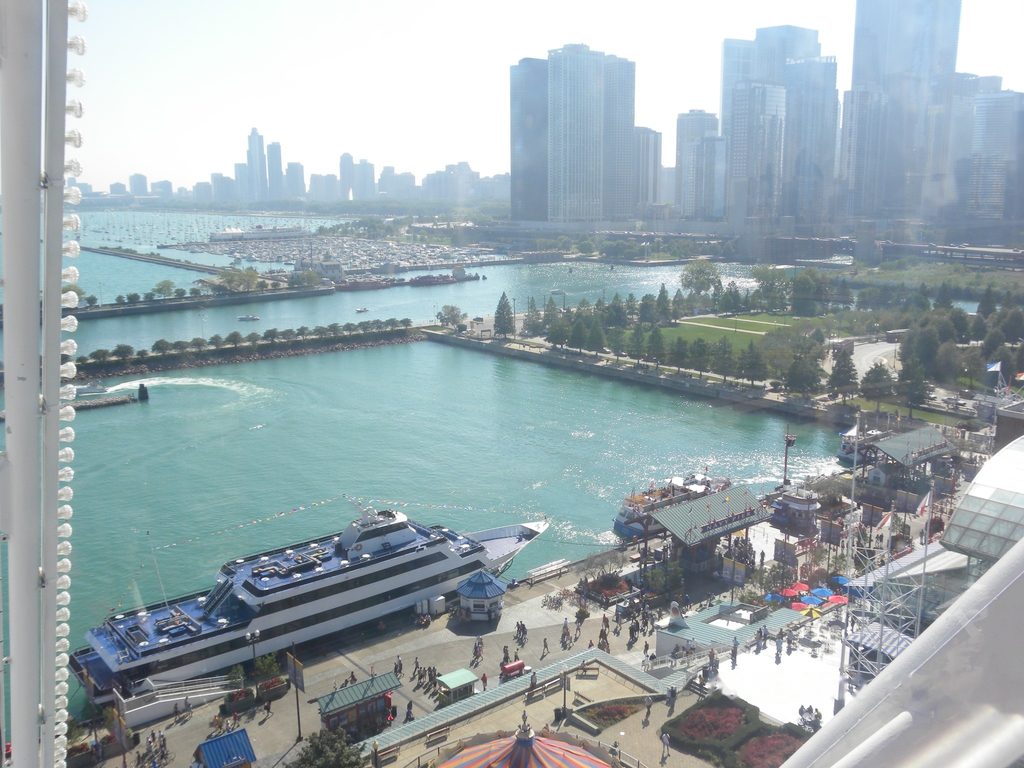
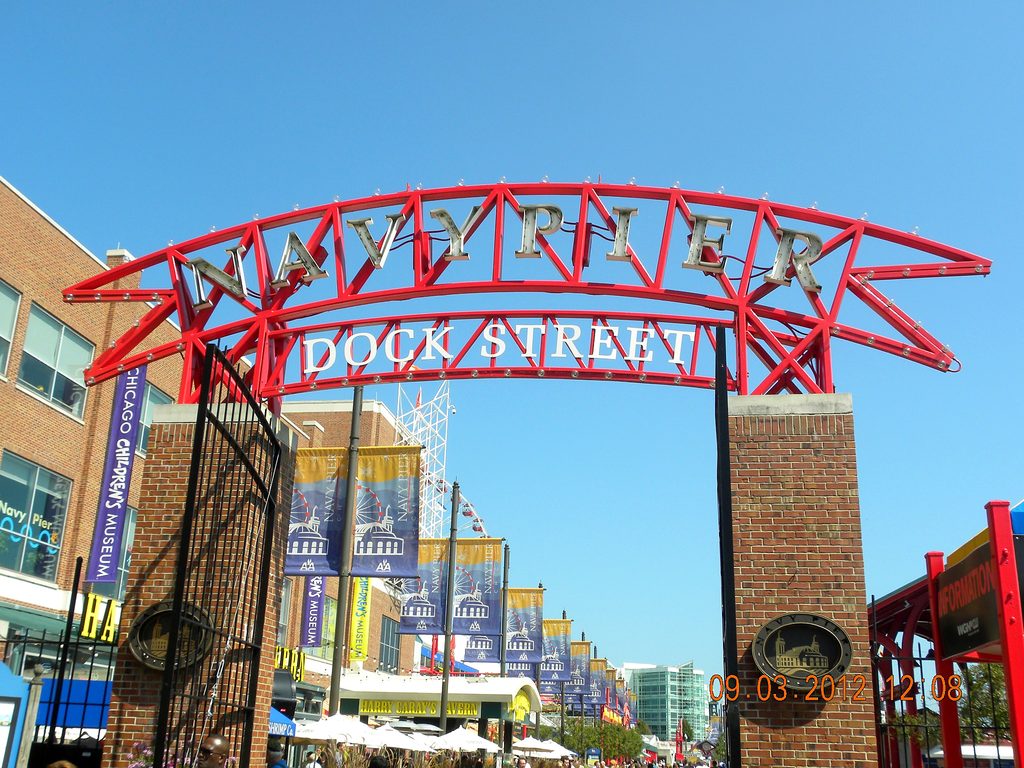
Extending into Lake Michigan, Navy Pier is one of Chicago’s most popular recreational destinations. Originally opened in 1916 as Municipal Pier, it has served several purposes over the decades, including shipping, recreation, and military training. Today, it is a lively waterfront attraction offering restaurants, entertainment, boat tours, cultural venues, and beautiful lake views. Its most recognizable feature is the Centennial Wheel, a large observation wheel that offers sweeping views of the lake and skyline. Navy Pier is particularly enjoyable on a sunny day, when the waterfront comes alive with visitors enjoying the atmosphere. Families can explore the Chicago Children’s Museum, while theater enthusiasts may be interested in performances at Chicago Shakespeare Theater. Seasonal events and fireworks displays add to the attraction.
Travel tip: Navy Pier is free to enter, although individual attractions and activities may charge admission. Allow time simply to enjoy the lakefront views.
11. Lake Michigan – Chicago’s beautiful waterfront
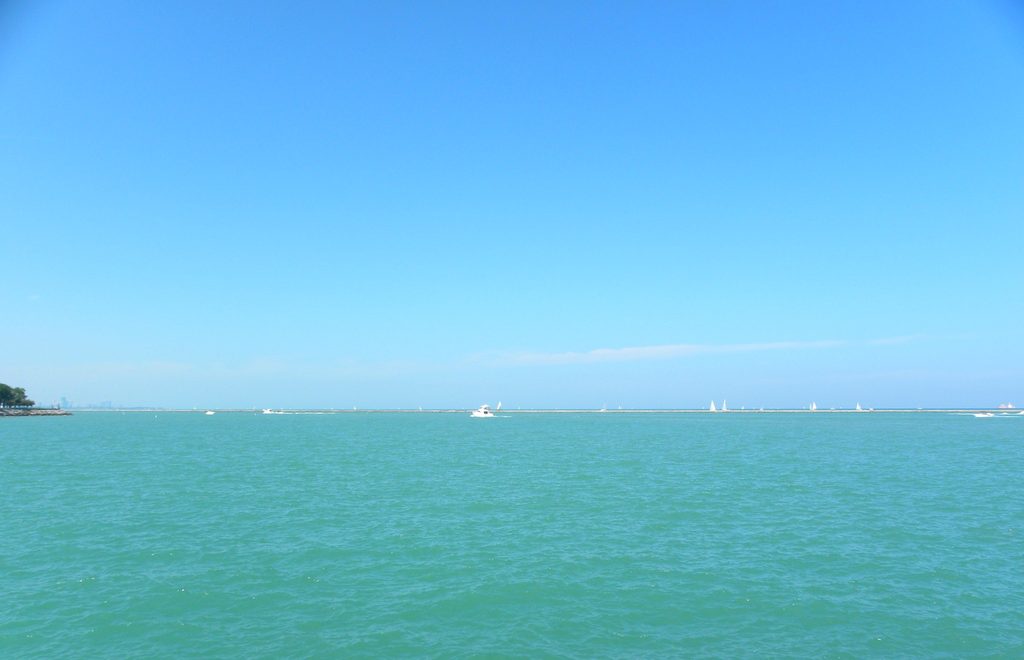
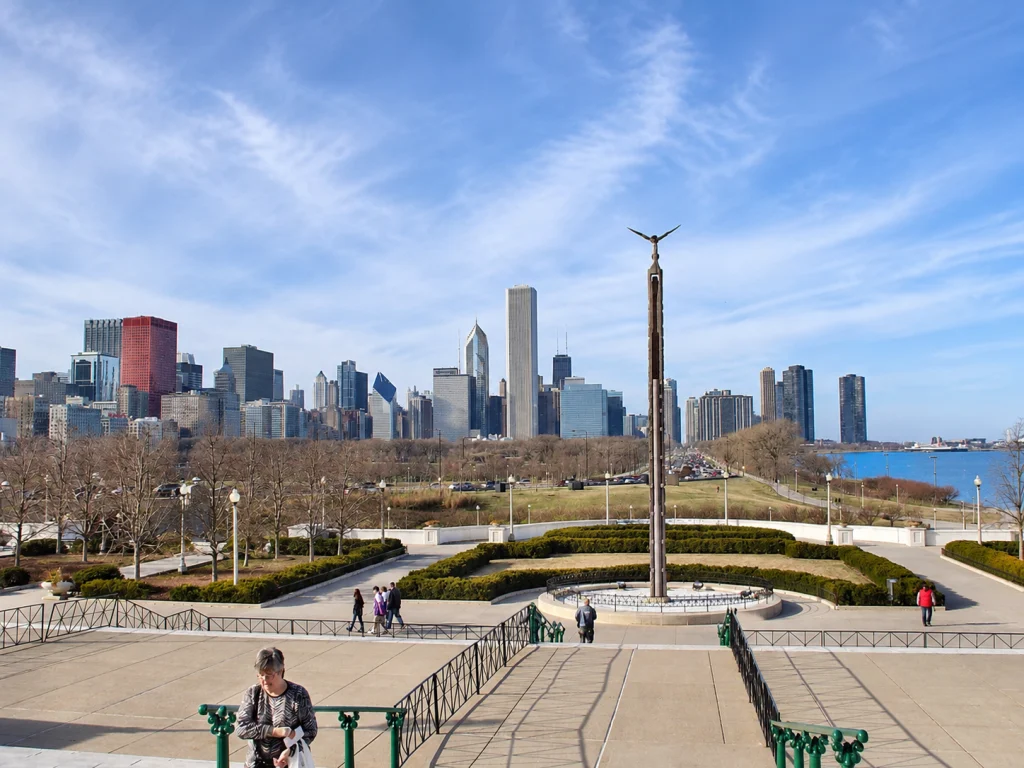
One of Chicago’s greatest attractions is not a building or museum. It is Lake Michigan. The enormous lake gives Chicago a waterfront that sometimes feels more like a seaside destination than an inland American city. During summer, beaches fill with swimmers and sunbathers, boats crowd the marinas, and cyclists and runners enjoy the Lakefront Trail. The trail stretches for approximately 18.5 miles along the shoreline, connecting parks, beaches, and neighborhoods. Popular places to explore include Oak Street Beach, North Avenue Beach, and the lakefront near Museum Campus. The views of Chicago’s skyline from the waterfront are particularly impressive. For photographers, this is one of the best places to capture the contrast between the city’s modern architecture and the seemingly endless expanse of water.
Travel tip: If you’re visiting in summer, set aside at least an hour for a lakefront walk. Early morning and late afternoon provide especially attractive light for photography.
12. Museum Campus – three outstanding museums in one location
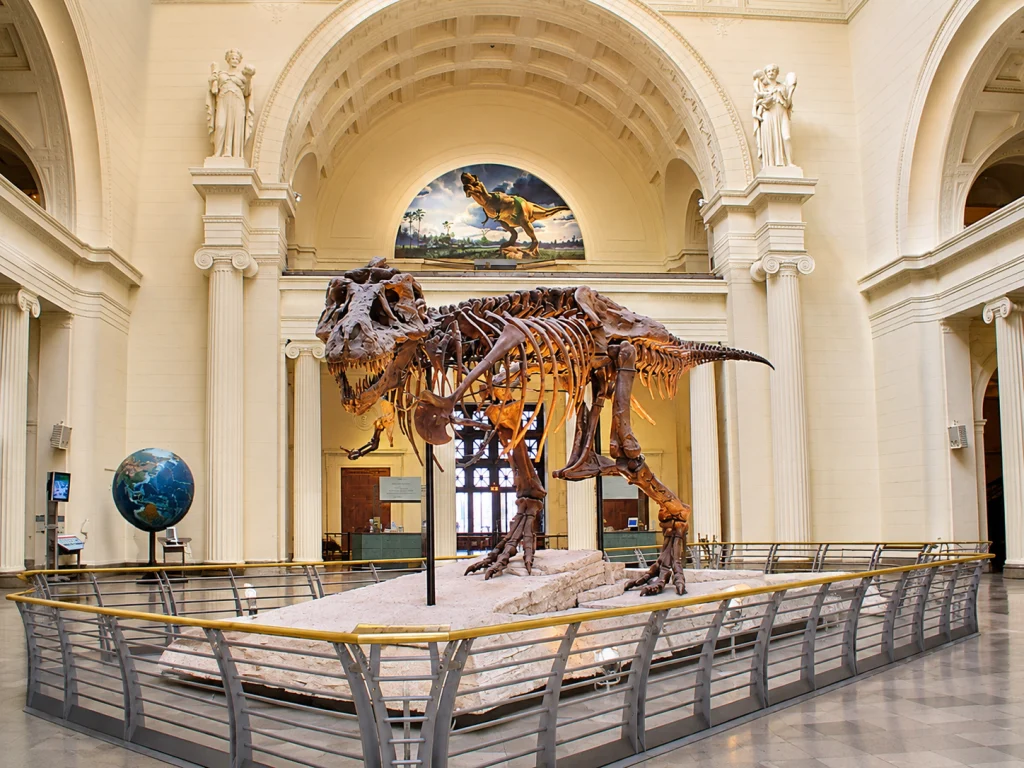
Located just south of downtown, Museum Campus brings together three major Chicago attractions in a beautiful lakefront setting. The Field Museum is one of the country’s leading natural history museums, famous for its dinosaur exhibits, including SUE, the Tyrannosaurus rex. Nearby, the Shedd Aquarium introduces visitors to marine and freshwater ecosystems, while the Adler Planetarium explores astronomy and space science. Even if you don’t plan to enter all three museums, the surrounding parkland is worth visiting for its views of the Chicago skyline. The area near Adler Planetarium is especially popular with photographers.
Travel tip: Each museum deserves several hours, so don’t try to visit all three in a single afternoon. Choose according to your interests.
13. The Great Chicago Fire – the disaster that changed a city
To understand modern Chicago, it helps to know something about the disaster that transformed it. On October 8, 1871, a devastating fire began on the city’s southwest side and spread rapidly through neighborhoods filled with wooden buildings. The Great Chicago Fire burned for approximately two days, destroying thousands of structures and leaving roughly 100,000 people homeless. The disaster became one of the defining events in Chicago’s history. Although the destruction was enormous, the city rebuilt with remarkable determination. The reconstruction helped create opportunities for architectural experimentation, new building techniques, and eventually the development of modern skyscrapers. Chicago’s rise as an architectural center was shaped by many factors, but the rebuilding era played an important role. Today, the city remains an extraordinary place to explore the history of urban design.
Did you know? The famous story blaming Mrs. O’Leary’s cow for starting the fire is a legend, not an established historical fact.
14. Chicago – the birthplace of the modern skyscraper
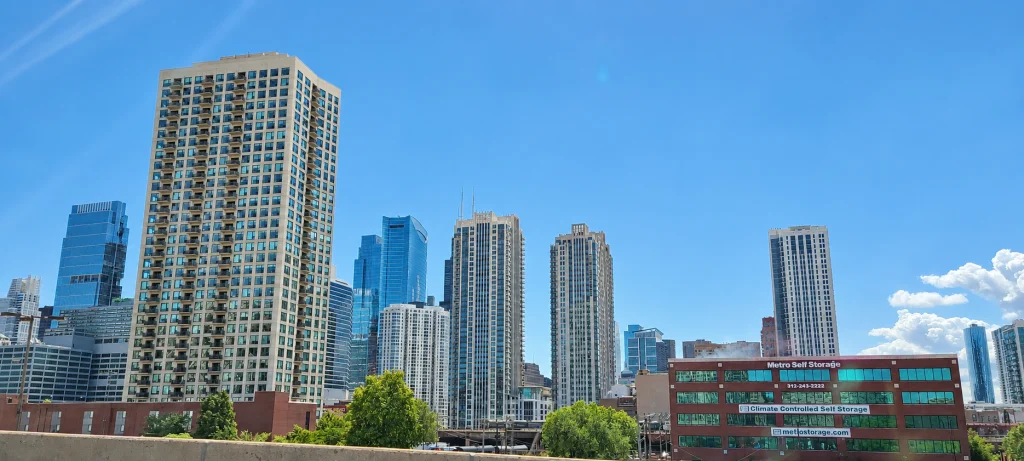
Chicago played a pioneering role in the development of the modern skyscraper. The Home Insurance Building, completed in 1885 and designed by William Le Baron Jenney, is often described as the world’s first skyscraper because of its innovative metal-frame construction. Although the building was demolished in 1931, its influence on architectural history remains significant. Chicago became home to influential architects and architectural movements, including the Chicago School. Louis Sullivan, Daniel Burnham, and later Frank Lloyd Wright all contributed to the region’s extraordinary architectural legacy. Visitors interested in architecture should explore the historic buildings of the Loop, including the Rookery Building, the Auditorium Building, and the Monadnock Building. The Chicago Cultural Center is another architectural treasure, famous for its elaborate interiors and magnificent stained-glass domes.
Travel tip: Architecture enthusiasts should consider a guided walking tour of the Loop in addition to a river cruise.
15. Polish Chicago – a city with deep Polish roots
Chicago has long been one of the most important centers of Polish-American life. Generations of Polish immigrants helped shape the city’s neighborhoods, churches, businesses, cultural institutions, and traditions. At various points in its history, Chicago became known for having one of the largest concentrations of people of Polish descent outside Poland. For Polish visitors, exploring this heritage can be particularly rewarding. One of the most important institutions is the Polish Museum of America, established in 1935. Its collections preserve Polish and Polish-American history, art, documents, and cultural traditions. The historic Polish Downtown area around Milwaukee Avenue and Division Street was once a major center of Polish immigrant life. Other neighborhoods, including Avondale and areas of the Northwest Side, also developed strong Polish communities. Chicago’s Polish heritage is visible in its churches, architecture, cultural organizations, festivals, and family businesses. For me, Chicago’s Polish connections are part of what makes the city especially interesting. Having lived there before moving to California, I remember how naturally Polish and American influences could coexist in everyday life.
Travel tip: If Polish-American history interests you, allow time for the Polish Museum of America and consider exploring historic Polish neighborhoods beyond downtown.
16. Chicago’s neighborhoods – beyond the tourist attractions
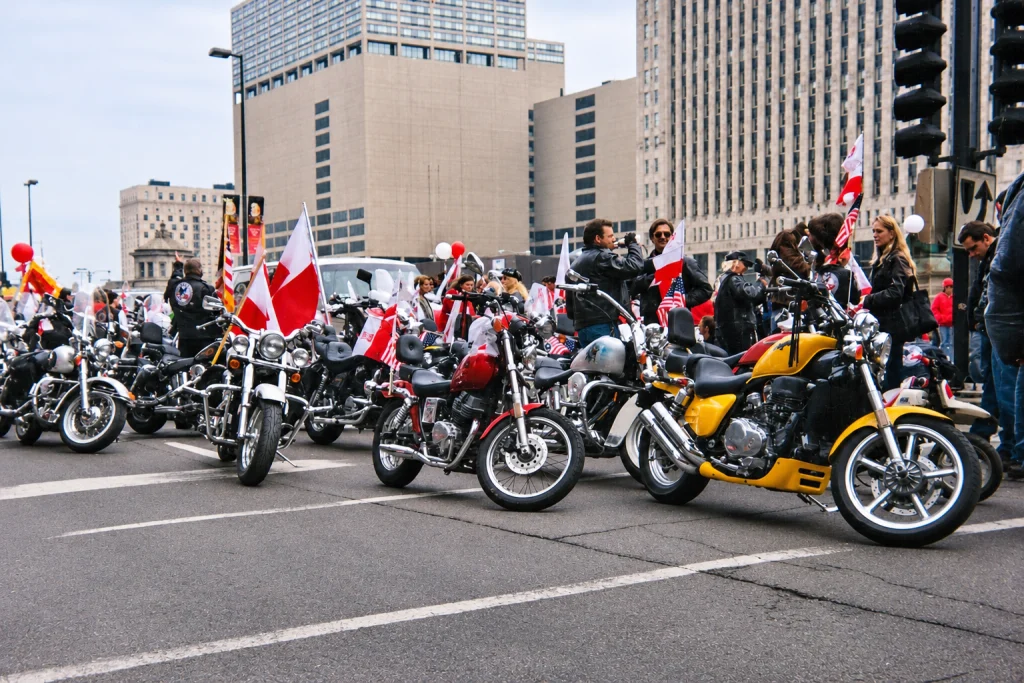
Although downtown contains many of Chicago’s most famous landmarks, some of the city’s most interesting experiences are found in its neighborhoods. Lincoln Park offers beautiful green spaces, historic residential streets, and the popular Lincoln Park Zoo. Wicker Park and Bucktown are known for independent shops, restaurants, music venues, and creative culture. Pilsen is celebrated for its Mexican-American heritage, colorful murals, and the National Museum of Mexican Art. Hyde Park, on the South Side, is home to the University of Chicago and the renowned Griffin Museum of Science and Industry. And for visitors interested in Chicago’s baseball traditions, Wrigleyville offers the famous Wrigley Field, home of the Chicago Cubs. Exploring neighborhoods gives visitors a more complete understanding of Chicago beyond its spectacular skyline.

17. Chicago’s food – more than deep-dish pizza
Chicago has a distinctive culinary identity, shaped by generations of immigrants and local traditions. Its most famous specialty is deep-dish pizza, known for its thick crust, generous cheese, and rich tomato sauce. But Chicago-style food doesn’t stop there. Other local favorites include Chicago-style hot dogs, Italian beef sandwiches, and Garrett Mix popcorn, which combines caramel and cheese flavors. The city’s restaurant scene also reflects its diverse communities, offering everything from traditional Polish dishes to Mexican, Italian, Asian, and contemporary American cuisine. Food is an important part of experiencing Chicago, so leave room in your itinerary to try something local.
And remember: Chicago’s food scene is much more varied than its most famous dishes suggest.

How many days do you need in Chicago?
Chicago is a large city, and trying to see everything in one day would be exhausting. For first-time visitors, I recommend at least three days.
Day one – classic downtown Chicago
- Start at Millennium Park and Cloud Gate, then visit the Chicago Cultural Center and the Art Institute.
- Continue toward the historic Route 66 starting point before walking south to Buckingham Fountain.
- In the afternoon, explore the Chicago Riverwalk and take an architectural boat cruise.
- Finish the day with a panoramic view from Willis Tower.
Day two – Lake Michigan and the Magnificent Mile
- Begin with a walk along the lakefront or a visit to Museum Campus.
- Continue to Navy Pier, enjoy the waterfront atmosphere, and consider riding the Centennial Wheel.
- Spend the afternoon exploring the Magnificent Mile and historic Water Tower.
- If time permits, visit 360 CHICAGO for sunset views.
Day Three – history, culture, and hidden Gems
- Visit Magdalena Abakanowicz’s Agora and explore the southern section of Grant Park.
- Then choose a museum or neighborhood according to your interests.
- Polish-American history enthusiasts might visit the Polish Museum of America, while architecture lovers could explore the historic Loop or Frank Lloyd Wright’s work in nearby Oak Park.
- Finish your visit with dinner in one of Chicago’s distinctive neighborhoods.
Practical tips for visiting Chicago
When Is the best time to visit?
Late spring through early autumn is generally a wonderful time to explore Chicago. Summer brings warm weather, festivals, lakefront activities, and outdoor concerts, although popular attractions can be crowded. September and early October can be particularly pleasant, with milder temperatures and beautiful seasonal colors. Winter has its own charm, especially around the holidays, but Chicago can be extremely cold and windy.
Getting around
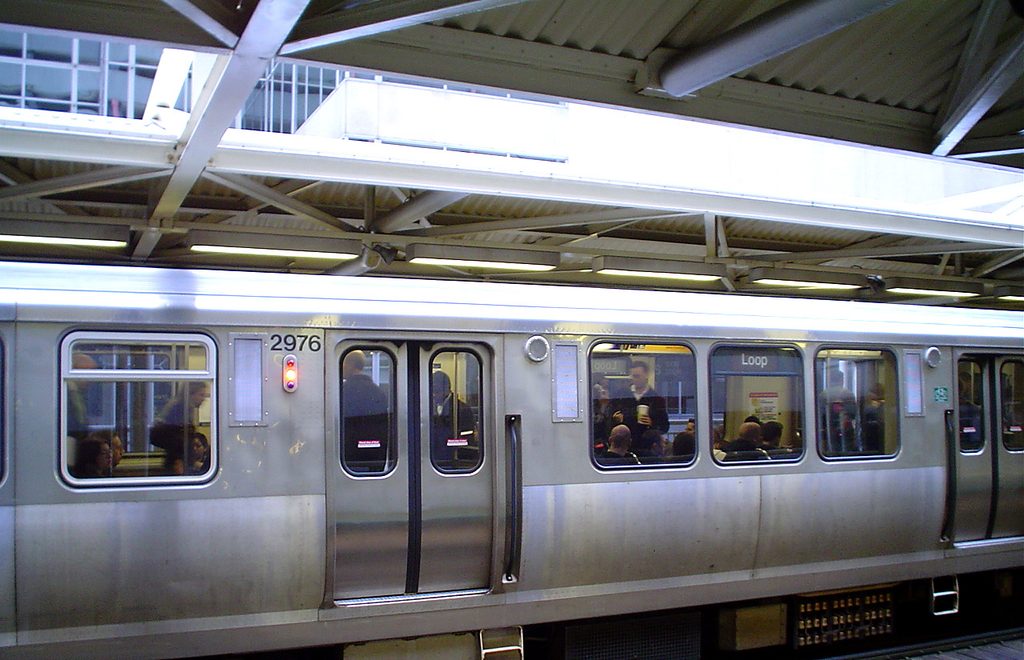
Chicago has an extensive public transportation network operated by the Chicago Transit Authority (CTA). The elevated trains, commonly called the L, connect downtown with many neighborhoods and both major airports. For most downtown sightseeing, walking and public transportation are more convenient than driving. Parking can be expensive, and traffic is often heavy.
Which airport should you use?
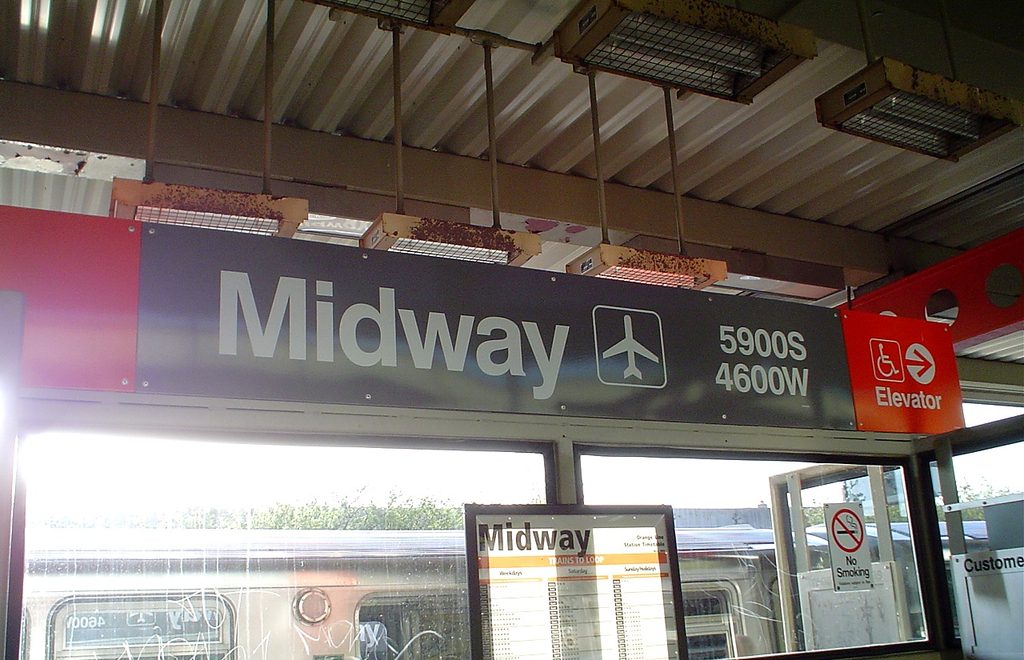
Chicago has two major commercial airports. O’Hare International Airport (ORD) is one of the country’s busiest airports and offers extensive domestic and international connections. Midway International Airport (MDW) is smaller and can be convenient for domestic flights. Both airports are connected to downtown by CTA trains.
Where should you stay?
For first-time visitors, the Loop, River North, Streeterville, and the Magnificent Mile area are convenient bases. These neighborhoods provide relatively easy access to major attractions, restaurants, and public transportation.
A few final suggestions
Wear comfortable walking shoes, check museum opening hours, and reserve popular observation decks or cruises in advance. Chicago’s weather can change quickly, especially near Lake Michigan, so bring an extra layer even during warmer months. Most importantly, don’t rush. Some of Chicago’s most memorable experiences come from simply walking along the river, discovering an unexpected building, or stopping to admire the skyline.
Final thoughts – why Chicago is worth visiting
I have lived in several places and traveled extensively, but Chicago remains a city I genuinely enjoy returning to. Perhaps that’s because I once called it home. Perhaps it’s the extraordinary architecture, the energy of downtown, or the beautiful views of Lake Michigan. Or perhaps it’s simply that Chicago always seems to have another story waiting to be discovered. Even after living here for three years and returning many times, I continue to find places I haven’t explored and details I hadn’t noticed before. And that, to me, is one of the best reasons to visit. Chicago isn’t merely a destination where you check famous attractions off a list. It’s a city to experience, explore, and discover at your own pace.
Have you visited Chicago? What was your favorite place in the Windy City? Share your experiences in the comments!
Discover more destinations, travel stories, and sightseeing inspiration on Discovering Our World.